If your business still relies on passwords as the main way to protect user accounts, you may be carrying more risk than necessary. Strong passwords, MFA, and staff training still matter, but passwords remain one of the weakest links in many organisations. They are reused, shared, guessed, stolen, and often handed over through convincing phishing attacks.
That is why passkeys for business are becoming a much bigger focus in 2026. The NCSC now recommends stronger, phishing-resistant authentication methods, while businesses are also facing more advanced scams and AI-driven impersonation attempts. For a blog topic that is timely, useful, and SEO-friendly, this is a strong choice.
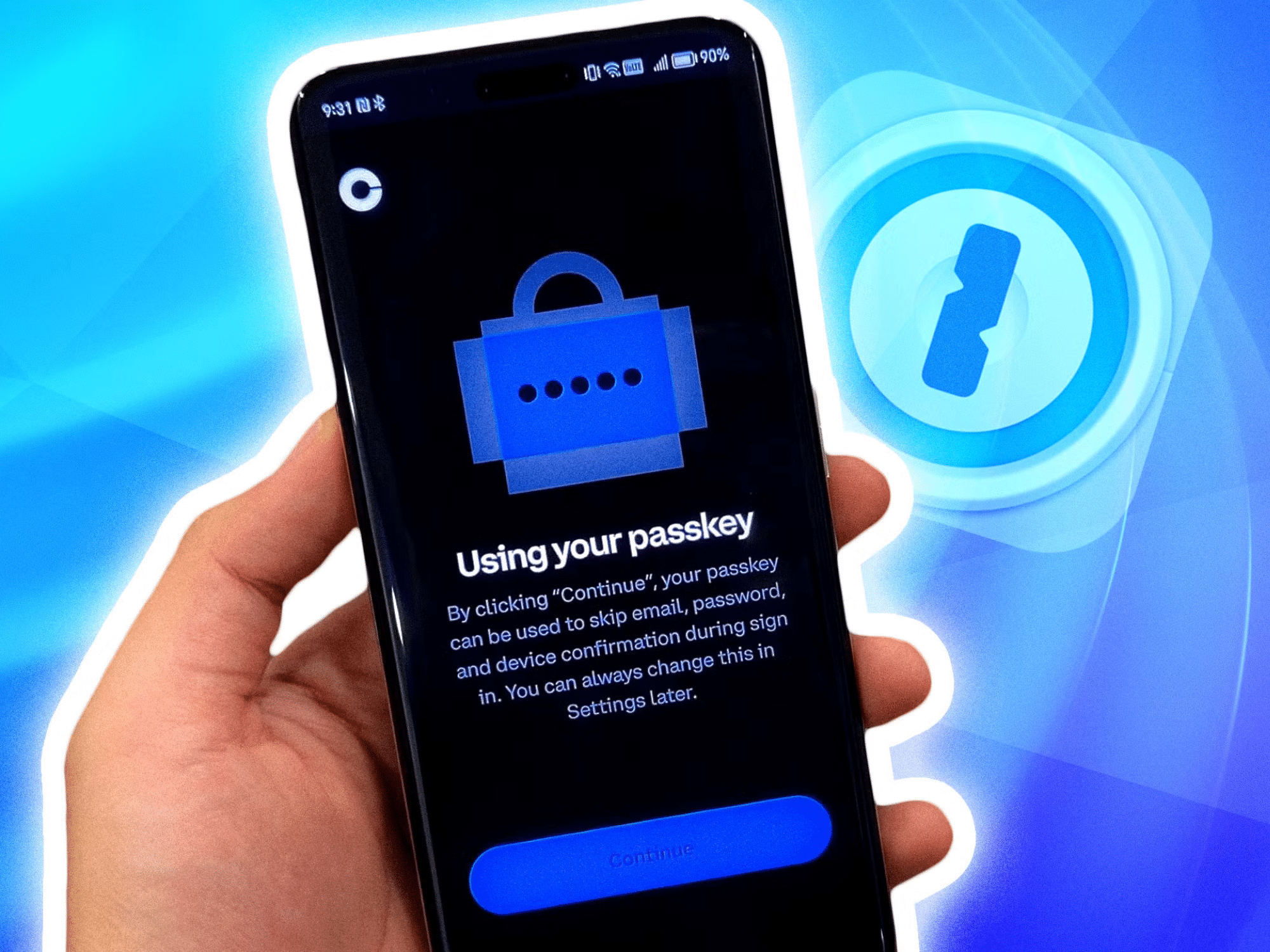
A passkey is a more secure alternative to a traditional password. Instead of signing in by typing a password, the user authenticates using a device-based method, such as fingerprint or facial recognition, or a device PIN.
Under the surface, passkeys rely on cryptographic credentials rather than shared secrets. That is important because a traditional password can be stolen and reused, whereas a passkey is designed to be much harder for attackers to intercept or exploit.
Put simply, passkeys reduce the risk of asking users to remember and type sensitive login details.
For businesses, that matters because many account compromise incidents still begin with stolen credentials.
This is not just another tech trend. It is a response to a real and growing problem.
Phishing attacks are still one of the biggest threats facing organisations. The NCSC continues to highlight phishing as a major risk, and its guidance now points organisations towards authentication approaches that are more resistant to phishing than older methods.
At the same time, Microsoft’s recent security reporting has highlighted the rise of AI-powered deception, showing how cybercriminals are using increasingly convincing methods to impersonate trusted people, services, and communications.
That means businesses are under pressure from both sides:
Passkeys help solve part of that problem by removing the need for users to type passwords into login forms in the first place.
Many businesses assume passwords are fine as long as they have a policy in place. In reality, password policies often look stronger on paper than they do in day-to-day practice.
Here are some of the common issues businesses still face.
Even when staff know they should not reuse passwords, it still happens. If credentials are exposed in one breach, attackers often try the same login details across multiple accounts and services.
A strong password is of no use if someone is tricked into entering it on a fake login page. This is one of the biggest reasons passkeys are gaining attention.
Resets take time and disrupt productivity. While each incident might seem minor, the cumulative cost adds up.
Some forms of MFA are still useful, but not all MFA provides the same level of protection. The NCSC explicitly notes that some techniques protect better against phishing than others.
This is why the conversation is moving beyond “do you use MFA?” and towards “what type of authentication are you using?”
There are several reasons why business passkeys are becoming more attractive.
This is the biggest benefit. Because users are not typing a password that can be stolen and replayed, passkeys reduce one of the most common ways attackers gain access to accounts.
Logging in can be quicker and simpler. Staff use authentication methods they already know, such as Face ID, a fingerprint, or a device unlock code.
Less time spent remembering, resetting, and managing passwords means fewer interruptions and less friction for users.
Passkeys support a more modern identity-first security model, which is becoming increasingly important as businesses use more cloud platforms, remote access, and distributed teams.
One of the strongest benefits of passkeys is that they reduce the need for people to “get it right” every time. Good cybersecurity should not depend entirely on perfect user decisions.
Not necessarily everywhere, at least not yet.
Some organisations still rely on older systems that are built around usernames and passwords. Others use shared devices, legacy software, or specialist applications that are not fully compatible with modern passwordless sign-in methods.
That does not mean passkeys are irrelevant. It simply means rollout needs to be sensible.
For most businesses, the best approach is not a full switch overnight. It is a phased adoption plan.
A sensible place to start might be:
That way, you reduce risk first in the areas where compromise would do the most damage.
If you are thinking about implementing passkeys, there are a few practical questions to answer first.
Review your core systems, especially email, cloud platforms, collaboration tools, and identity providers.
The easier the onboarding process, the better the adoption rate. Staff need clear instructions and a smooth process.
If a device is lost, replaced, or unavailable, the user must still be able to regain access securely.
As with any authentication method, access needs to be removed quickly and properly when somebody leaves the business or changes roles.
Authentication is only one part of security. The ICO continues to emphasise accountability, governance, and proportionate security measures in relation to the protection of personal data.
So passkeys should sit within a broader security and compliance strategy, not replace it.
There is also a wider governance angle here.
Businesses handling personal data are expected to take appropriate technical and organisational measures to protect it. The ICO’s guidance on accountability, governance, and data security makes it clear that security is not just about having policies written down. It is about taking proportionate action to reduce real-world risk.
If passwords are among the most common ways attackers gain access, then reducing your reliance on them is a sensible risk-reduction step.
Passkeys are not a compliance badge on their own. But they can support a stronger position by helping businesses demonstrate that they are moving towards safer authentication methods.
Passwords are not about to disappear entirely next month. Most organisations will continue operating in a mixed environment for a while, with some systems using passkeys and others still relying on traditional credentials.
Authentication is moving away from shared secrets and towards more secure, device-based, phishing-resistant methods. Businesses that start planning for that shift now will be in a stronger position than those that wait until they face a security problem.
It is current. It addresses a real business issue. It gives you room to demonstrate expertise. And it matches the kind of helpful, original, practical content Google says it wants to reward.
More importantly, it is a subject your audience can actually act on.
Businesses are under growing pressure to better protect user accounts, especially as phishing attacks become more convincing and costly. Passkeys will not solve every security challenge, but they can remove one of the oldest and weakest links in the chain.
That alone makes them worth talking about in 2026.
Passkeys for business are passwordless authentication credentials that let users sign in using secure device-based methods instead of traditional passwords.
In many situations, yes. They are generally more resistant to phishing and credential theft than passwords.
Yes. Many SMEs can start with admin accounts, finance teams, or supported cloud applications.
No. Staff awareness is still important, but passkeys reduce reliance on human judgment during sign-in.
Because phishing remains a major threat, and official guidance is increasingly pushing businesses towards stronger, phishing-resistant authentication methods.