Most businesses depend on their IT more than they realise. Emails, cloud apps, phones, broadband, security tools, payroll, customer systems – everything now relies on technology working smoothly in the background. When something breaks, the whole business feels it. Staff lose time, customers get frustrated, and the pressure lands on someone who suddenly becomes the “IT person”, even if it isn’t in their job description.
This experience is common, but it’s also avoidable. This is exactly where proactive IT support comes in. Instead of waiting for problems to appear, proactive support aims to prevent them altogether. It creates a stable, secure environment where your systems stay healthy and your team can focus on their work, not their tech.
In this guide, we’ll look at what proactive support actually involves, how it differs from traditional reactive services, and why more UK businesses are moving to managed IT services built on constant monitoring, regular maintenance, and long-term planning.
Traditional IT support works like this: something breaks, you call your provider, they fix it. This is called reactive support. It sounds fine in theory, but the cost comes in the form of disruption. By the time you spot the issue, it’s already affected your day. You might lose access to systems, struggle with slow devices, or face unexpected downtime.
Most IT headaches follow the same pattern:
Something goes wrong → Everyone stops → Someone phones IT → You wait → Productivity drops.
Reactive support focuses on repair. Proactive support focuses on prevention. With businesses relying more heavily on cloud services, online payments, remote working and cybersecurity, prevention is now the smarter and safer option.
This shift is why many companies are switching to managed IT services, where ongoing care replaces last-minute fixes.
Proactive IT support is an approach where your provider actively monitors, maintains and improves your systems before issues turn into problems. Instead of only stepping in when something breaks, they work continuously to keep everything running well.
At its core, proactive support has three main goals:
Here’s how that works in practice.
A proactive approach starts with constant visibility. With IT monitoring, your provider watches the health and performance of your systems at all times. This includes things like:
The benefit is simple: when something unusual is spotted, action can be taken immediately.
For example:
In a reactive setup, you’d only know about these problems once something stops working. With proactive support, someone is already working on it long before you notice anything wrong.
Strong IT is built on small, routine tasks carried out consistently. With managed IT services, your provider handles all essential maintenance, such as:
These tasks don’t always feel dramatic, but they’re the reason systems stay fast, secure and reliable. Skipping maintenance is one of the most common causes of downtime, especially for small and medium-sized businesses that don’t have dedicated internal IT teams.
Proactive support ensures maintenance is ongoing, not forgotten.
Cybersecurity is no longer a separate topic from IT – it’s a core part of keeping a business stable. Proactive IT support takes a security-first approach. This often includes:
With cyber threats targeting businesses of all sizes, prevention is essential. Proactive support reduces the chance of attacks and speeds up your recovery if something does happen.
It’s not just about installing tools; it’s about continually checking that those tools are working.
One of the appeals of proactive support is the financial predictability it gives you. Instead of emergency call-outs and “surprise” invoices, you have a stable monthly cost that covers monitoring, maintenance and support.
Because issues are caught early, they’re usually simpler and cheaper to fix. Problems that would have caused days of downtime become quick background tasks.
Long-term, proactive support extends the lifespan of your devices and reduces the need for urgent replacements. That’s why many businesses see it as an investment rather than an expense.
Good IT support doesn’t just fix things. It helps you plan. A proactive provider works with you to understand your business goals and prepare your systems for future growth.
This might include:
This kind of forward-thinking approach means you’re never caught off guard by sudden upgrade requirements or outdated equipment.
The real impact on your day-to-day work
From the perspective of your team, proactive IT support simply feels like everything “just works.” You don’t notice the work happening behind the scenes, but you do notice the absence of problems.
The benefits usually look like:
Your staff spend less time dealing with issues and more time doing their jobs. That has a direct, measurable impact on productivity.
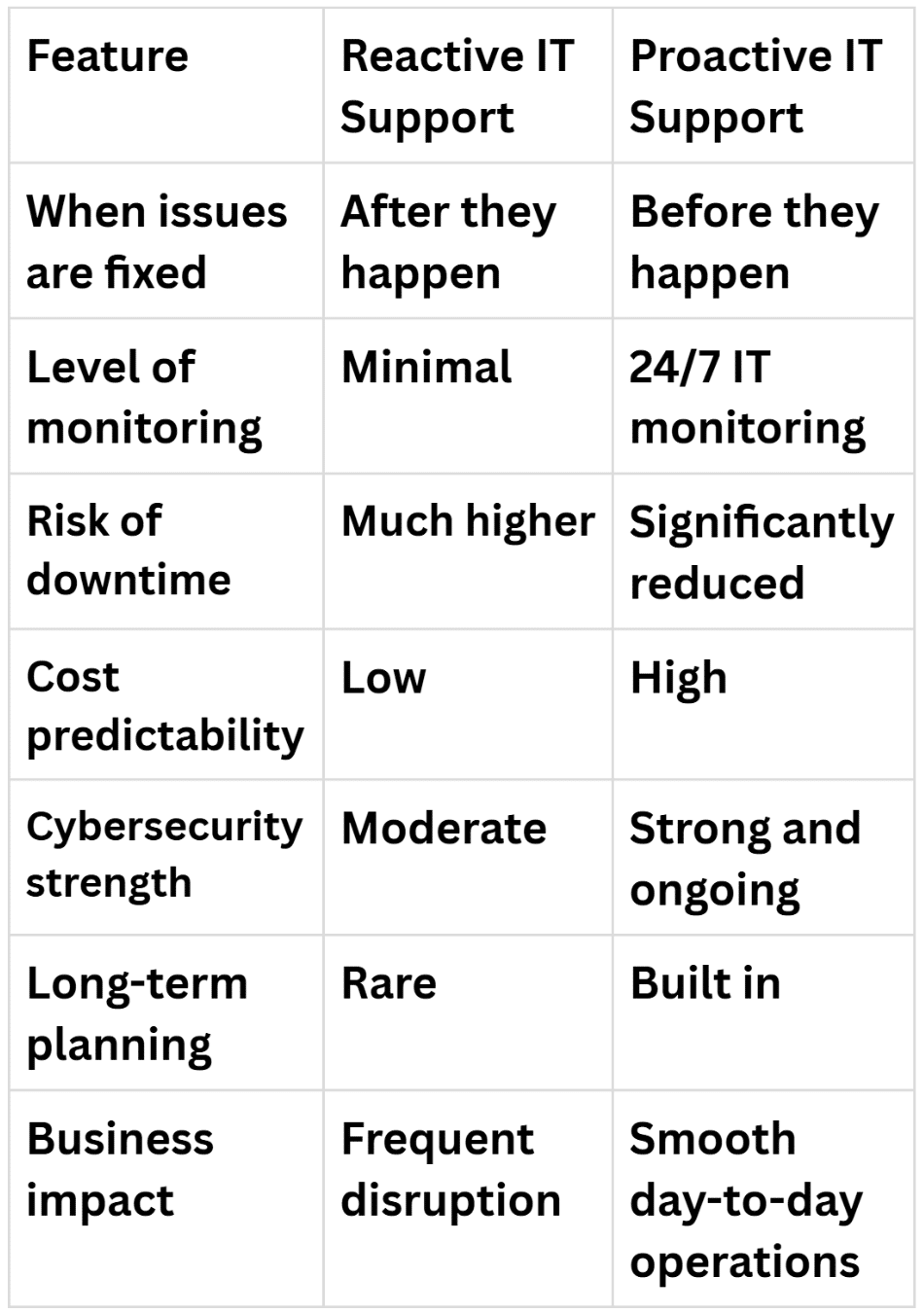
Most businesses switch to proactive support after one major outage or security scare. Once you’ve experienced the cost of downtime, preventing it becomes a priority.
Managed IT services combine proactive support, ongoing maintenance, and responsive helpdesk support into a single package. For many organisations, it’s the most efficient and cost-effective way to manage IT.
The trend towards remote work, cloud tools, and cybersecurity requirements has made this approach essential for businesses that don’t have an internal IT team.
With managed services, you get the benefits of a full IT department without hiring one.
Silver Lining takes a preventative, security-focused approach to managing business IT. Our services include:
Everything is built around keeping your systems stable, secure and ready for whatever your business needs next.
Whether you run a small office or multiple sites across the UK, proactive support ensures your team always has the tools they need to work efficiently.
Proactive IT support gives you confidence that your systems are being properly maintained. It minimises risk, reduces downtime, saves money and keeps your business secure. More importantly, it frees your staff from the frustration of unreliable technology.
Instead of reacting to problems, you stay ahead of them.